The Castillo de la Real Fuerza and The Giraldilla
In the heart of the historic center of Havana, a stone’s throw from the Plaza de Armas, stands a sober but imposing building: the Castillo de la Real Fuerza. Built in the sixteenth century, this fortress is the oldest in Latin America still standing. It embodies the beginnings of Spanish military architecture in the New World and today houses a fascinating museum dedicated to navigation and the maritime history of the island.
A fortress born of fear and ingenuity
Following repeated pirate attacks on the Cuban coast, in 1558 the Spanish colonists launched the construction of this fortification on the ruins of an earlier building considered too vulnerable. Designed by the engineer Bartolomé Sánchez, the Real Fuerza is built with massive stone walls and a deep moat which reinforces its security. However, ironically, its position set back in the bay will limit its effectiveness against threats from the sea.
Despite this, it remains a model of defensive organization, with its corner towers, its bastions and its wide walkway. It will serve as a residence for the governors of Havana before being replaced, over time, by other more advanced fortifications, such as the Castillo del Morro or The Cabaña.
The Giraldilla: the romantic sentinel of Havana
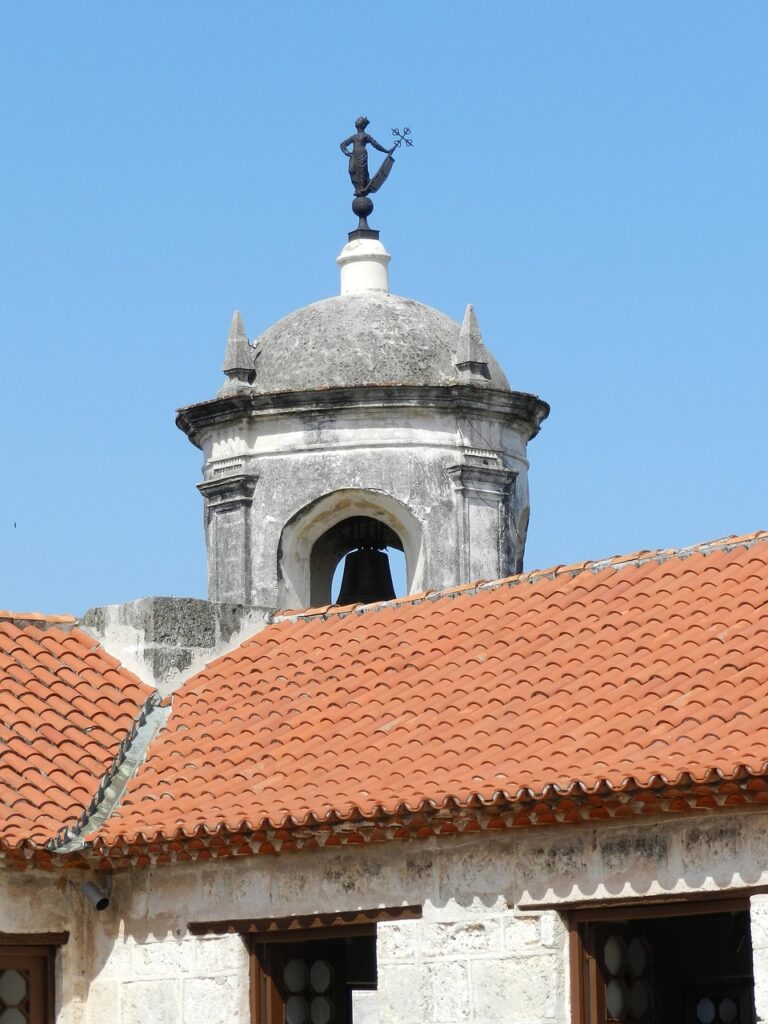
On one of the towers of the Castillo sits a small bronze statue that has become, over the centuries, one of the most endearing symbols of the city: the Giraldilla. This female figure holding a palm and scanning the horizon represents Isabel de Bobadilla, governor of Cuba in the sixteenth century and wife of the conquistador Hernando de Soto. Legend has it that she was desperately waiting for her husband to return, who had gone on an expedition to Florida and never returned.
The Giraldilla, in its melancholic posture, is today the emblem of the city of Havana, even appearing on the labels of the famous Havana Club rum. The original of the statue, weakened by time, is preserved inside the castle museum, while a replica still sits proudly at the top of the tower.
A museum dedicated to the sea and naval heritage
Transformed into a Cuban navigation museum, the Castillo de la Real Fuerza offers a rich collection of objects related to great explorations, shipbuilding and maritime colonial history. You can admire models of Spanish galleons, ancient navigation instruments, nautical charts, as well as artifacts found in the wrecks of sunken ships off the coast of the island.
The route is both educational and immersive, offering visitors a real journey back in time, from the sixteenth to the nineteenth century. A room is also dedicated to military architecture and the evolution of fortifications on Cuban territory.
Visit the Castillo: useful information
The Castillo de la Real Fuerza is located in the heart of the Habana Vieja, easily accessible on foot from the other historical sites. The building is open from Tuesday to Sunday, usually from 9h to 17h, and admission costs around 100 CUP per adult. Access is free for young children and guided tours can be organized on site.
The site is well shaded, which makes it a pleasant stopover even in the middle of the day. Count about 1h30 to 2h to fully enjoy the museum, the panoramic terrace, and discover the Giraldilla in its context.
An immersion in the beginnings of colonial Havana
The Castillo de la Real Fuerza, by its central position, its architectural sobriety and its historical importance, represents an essential step to understand the origins of Havana and the evolution of its coastal defenses. The moving presence of the Giraldilla, silent guardian of the horizon, adds a human and poetic dimension to the visit. This unique site combines military heritage, a romantic story and a view of the sea, offering visitors a stop that is as cultural as it is intimate.